
In international home textile sourcing, choosing and managing suppliers affects every step—from product development to order execution and final delivery. It directly impacts your costs, efficiency, and reputation. For sourcing professionals, it’s really a dynamic balancing act. This article breaks down a practical sourcing strategy based on home textile industry specifics, covering supplier types, samples, MOQs, lead times, quality, and complaints.
Sourcing is a dynamic process. The “right” supplier depends on your company’s current scale, product focus, and team capacity.
Factories: Best for price advantages and technical expertise.
Trading Companies: Offer flexibility, resource integration, and act as a built-in third-party QC.
Summary: If you have high-volume, stable orders and require strict cost control or technical precision, go with a factory. Otherwise, a trading company often saves you more in “hidden costs.” Don’t obsess over the supplier’s title during initial talks—evaluate their performance first.
Sample fees are unavoidable when developing new products or vetting new suppliers. In home textiles, sampling costs can range from a few dollars to hundreds. The core cost usually comes down to three things: weight, size, and color. If all three are new, the supplier might need to go through the full production process just for the sample fabric: Greige fabric → Dyeing → Finishing → Cutting → Sewing. This process typically takes 7–15 days, and costing $70 to $200 per color.
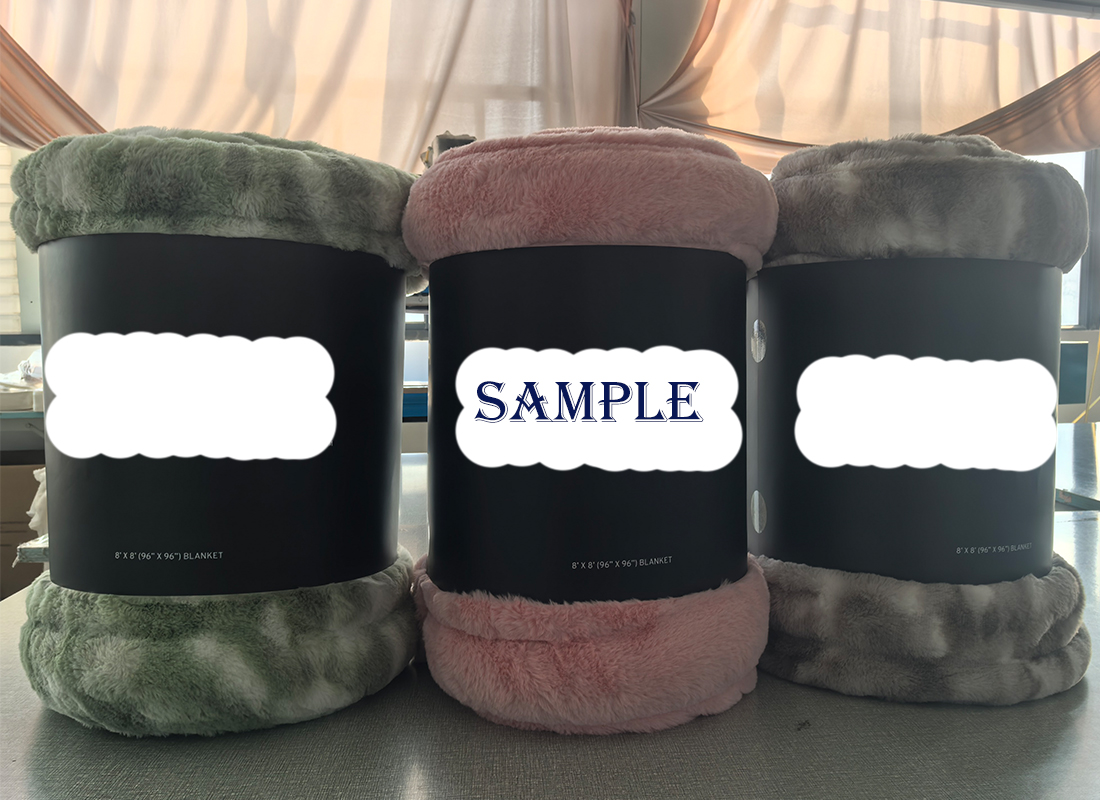
At Ecozymat, we help clients manage sampling costs with a phased approach:
This way, your total upfront cost is limited to express shipping until you’re fully satisfied with the product.
Home textile costs are calculated by weight. Therefore, the MOQ is driven by fabric weight, dimensions, and color.
Color MOQ: Dyeing typically requires 500kg per color. If you are below this, a “small-batch fee” (approx. $50) applies to cover the dye vat rental.
Fabric MOQ: This varies by material. Generally, Flannel requires 3,000kg per width, while Faux Fur requires 2,000kg.
Pro Tip: Different product sizes (e.g., 50×60” and 60×72”) can often share the same fabric width to help you meet the MOQ.
So How to Calculate Your Product MOQ? The answer: divide the fabric MOQ by the weight per blanket.
For example, take a faux fur blanket with the same fabric on both sides (face and back). The fabric weight is 450gsm, and you want two sizes that share the same fabric width: 50×60″ (127x152cm) and 60×72″ (152x183cm).
First, calculate the weight per blanket:
For 50×60″: 1.27m × 1.52m × (450 + 450)/1000 = 1.74 kg/pc
For 60×72″: 1.52m × 1.83m × (450 + 450)/1000 = 2.50 kg/pc
Now, if the fabric MOQ is 2000kg, how many blankets can you make?
2000kg ÷ (1.74kg + 2.50kg) = 470 pcs of each size (940 total).
But if your blanket uses different fabrics for face and back, you need to calculate separately:
MOQ for face fabric ÷ weight of face fabric per blanket = max units from face
MOQ for back fabric ÷ weight of back fabric per blanket = max units from back
The higher number is your blanket MOQ.
Pro Tip: If your specifications (gram weight and size) are standard, these MOQs are almost always negotiable. We work with factories to find flexible solutions for non-standard volumes.
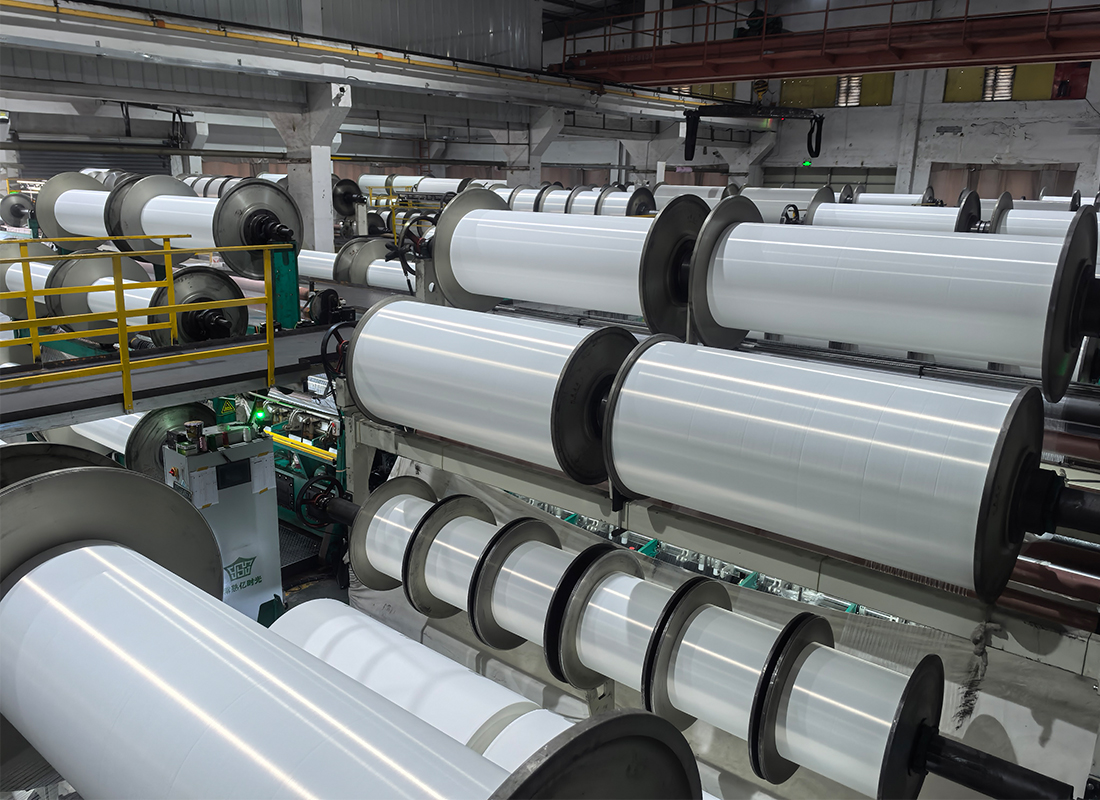
Knowing the accurate production lead time is key for solid sourcing plans. For flannel blankets and faux fur blankets, the standard workflow is: Knitting → Dyeing → Finishing → Cutting → Sewing → Packing. Lead time is the total for all these steps.
For a typical 40’HC order, under normal conditions:
Knitting: 10-15 days
Dyeing: 7-10 days
Finishing: 2-4 days
Cutting, Sewing, Packing: 10 days
Total: About 30-35 days.
Note: These timelines can extend during peak seasons. Tracking milestones against this schedule is the best way to prevent delays.
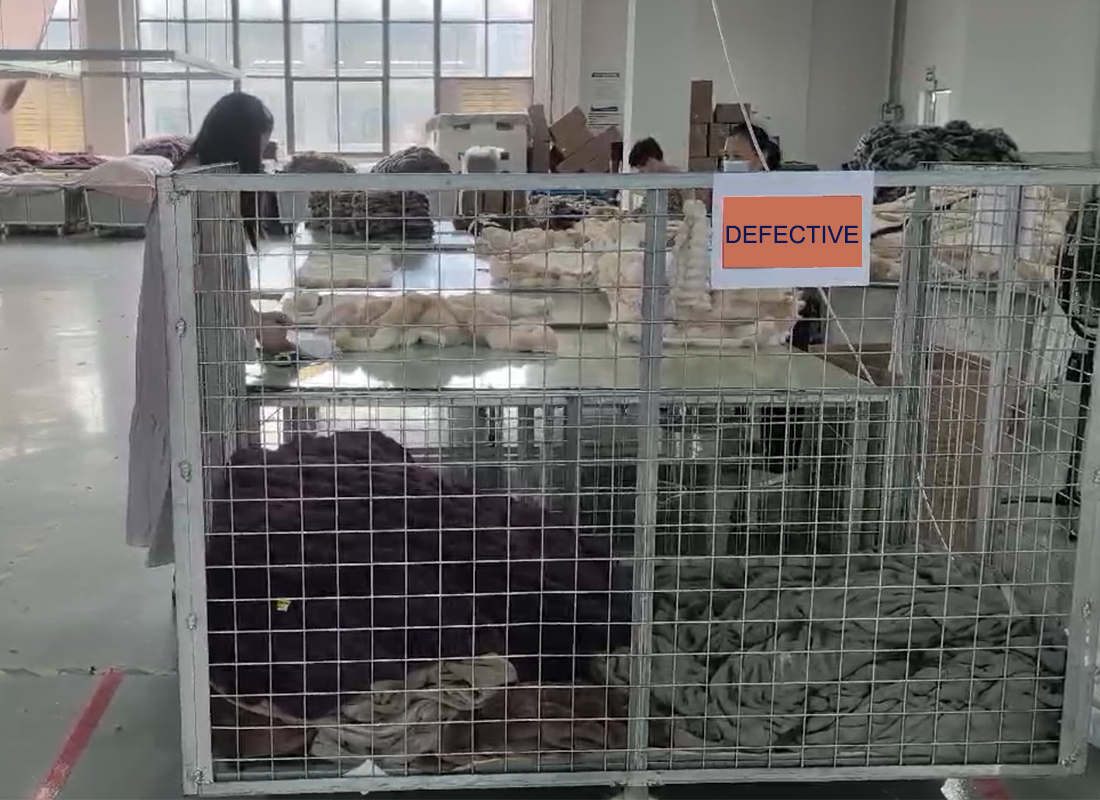
Most buyers rely on “pre-order factory audits” and “pre-shipment inspections.” But these are reactive. If the final inspection finds problems, you’re often stuck choosing between accepting defects or delaying shipment.
Better quality control happens during production. Two ways to do it:
More Inspections: Schedule “in-line” and “final” inspections. This catches issues early but costs more.
Partner with a Hands-On Trader: Experienced traders, like Ecozymat, often have dedicated QC staff who do on-site or roving inspections throughout production. They check key points (knitting, dyeing, sewing) to help the factory spot and fix problems immediately, stopping quality issues before they start.
This “preventive” approach protects your interests much better than a final “inspection.”
When issues arise, the focus should be on execution and compensation.
Implementation: Factories often deprioritize “fixes” during peak seasons because they slow down the line and increases the factory’s costs. A smart move is to offer a small price incentive—such as adding $300 to the total order to cover “re-inspection costs.” This motivates the factory to prioritize your quality over others.
Compensation: This can cover product cost, freight, duties, etc. How you get paid back depends on payment terms. If you’ve already paid in full, look for a credit on future orders. We recommend negotiating a deduction spread over the next two shipments, aiming for a larger percentage in the first re-order to recover your costs quickly.
We will contact you within 1 working day, please pay attention to the email with the suffix “@ecozymat.com”.