The market for cooling bedding—including blankets, mattress protectors, and pillowcases—continues to grow. But for brands sourcing these products, key questions remain: What makes fabric feel cool? Why do some products lose their cooling effect after a few washes? And most importantly, how do you select the right cooling products for your target market?
This guide answers these questions by examining how cooling textiles work and what sets different materials apart—helping you make informed sourcing decisions that align with your brand positioning.
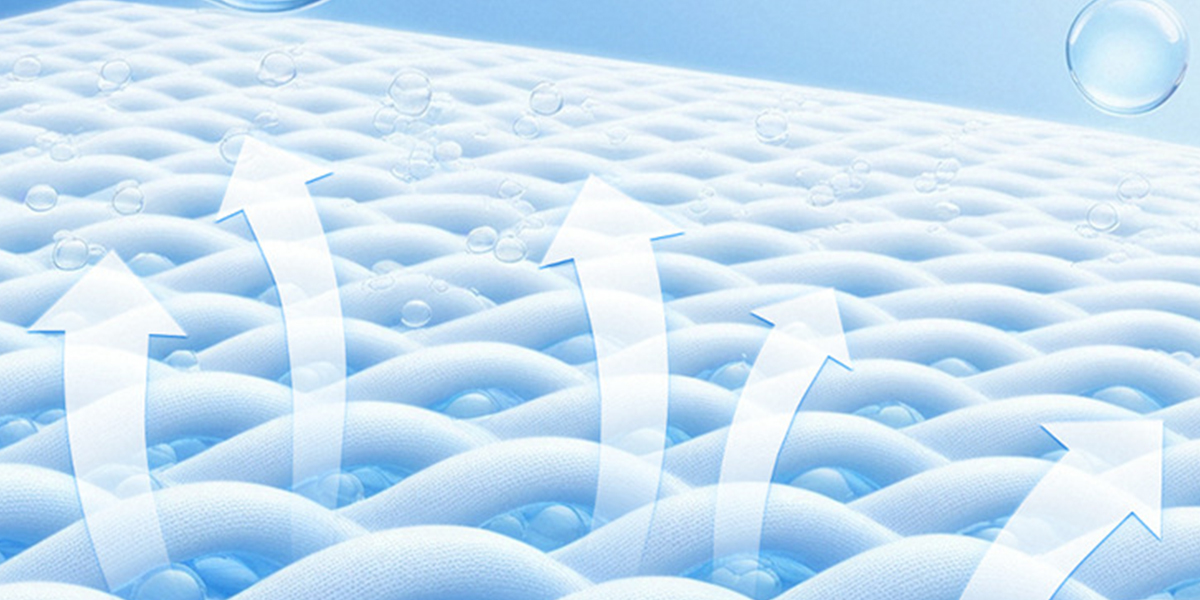
Cooling products don’t actively generate cold. Their secret lies in efficient heat transfer and management.
When you touch a cooling fabric, that initial sensation of coolness depends on the fiber’s thermal conductivity. High-quality products use fibers with high thermal conductivity to quickly draw heat away from the skin. This is known as “instant contact coolness.”
But the real test is sustained cooling. If heat is only absorbed but not released, the fabric will quickly warm up. Therefore, effective cooling products must offer:
The popularity of cooling blankets and related products is driven by genuine social needs rather than just marketing:
The “Hot Sleeper” Necessity
A significant portion of the global population naturally runs warm and struggles with night sweats, creating persistent demand for temperature-regulating bedding.
Rising Global Temperatures
With summer night temperatures increasing annually, traditional cotton bedding often fails to provide adequate comfort for restful sleep.
Energy Concerns
Fluctuating energy prices have led more consumers to seek physical cooling solutions that reduce reliance on air conditioning and help lower electricity costs.
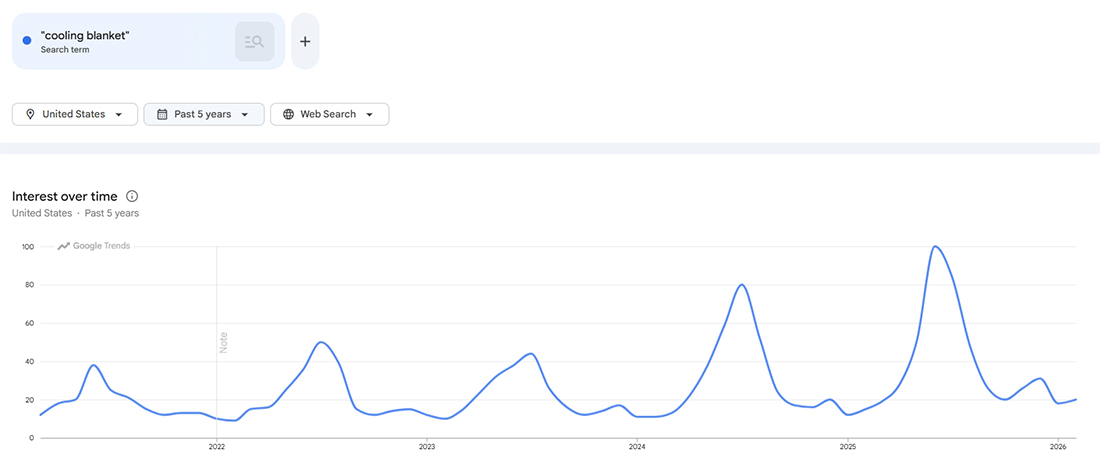
From Google Trends
Currently, the three most popular fabric types for cooling are nylon, bamboo, and Tencel. Each has distinct characteristics that suit different market positions and customer needs.
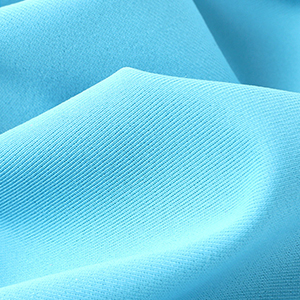
Fiber Type: Synthetic fiber (polyamide) with naturally high thermal conductivity.
Key Advantages for Brands: Offers genuine, high-instant cool touch (high Q-max) that doesn’t wash out. Extremely durable, abrasion-resistant, and effectively wicks moisture away from the body. The cooling performance is inherent to the fiber structure, not dependent on added coatings that can degrade over time.
Sourcing Considerations: Moderate moisture absorption; can be prone to snagging depending on fabric construction.
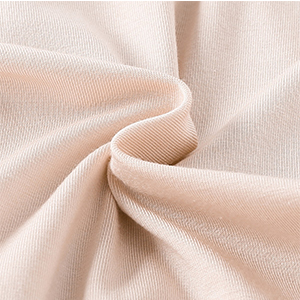
Fiber Type: Regenerated cellulose fiber made from bamboo pulp. Considered eco-friendly and biodegradable.
Key Advantages for Brands: Naturally contains antibacterial properties that help inhibit odor-causing bacteria, making it antimicrobial and hypoallergenic. Excellent moisture absorption and breathability create a cooling effect through evaporative moisture management.
Sourcing Considerations: Lower durability compared to nylon. Fiber strength can weaken after repeated washing, potentially leading to pilling or changes in texture over time.
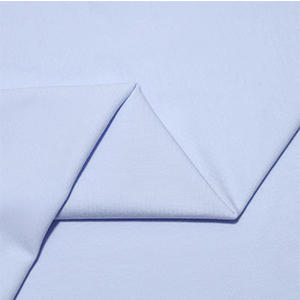
Fiber Type: Made from sustainably sourced wood pulp using a closed-loop production process. Considered an environmental benchmark in the textile industry.
Key Advantages for Brands: Exceptionally smooth surface provides a silky, soft, luxurious feel against skin. Superb moisture-wicking and breathability properties deliver gentle coolness and dry comfort.
Sourcing Considerations: Can be less durable and more prone to pilling than nylon. Typically the highest-cost option among these three.
Cooling Fabric Comparison at a Glance
Selection Criteria | Nylon | Bamboo | Tencel (Lyocell) |
Core Strength | Performance-focused & Durable | Naturally Anti-bacterial & Breathable | Silky Feel & Eco-Friendly |
Cooling Sensation | High-instant cool | Evaporative/absorbent cool | Silky-smooth, moisture-wicking cool |
Q-max Value (tested at 15°C) | 0.28-0.34 | 0.15-0.18 | 0.16-0.2 |
Best Selling Point | Durable, quick-drying, lasting coolness | Anti-bacterial, odor-resistant, biodegradable | Silky soft, moisture-wicking, sustainable |
Ideal Target Audience | Performance-focused, hot sleepers | Parents, sensitive skin, eco-basic | Mid-to-high end, sustainability focused |
Material Selection
Choose from Nylon, Bamboo, Tencel, or blended options to match your specific market positioning. Whether you need maximum cooling performance, natural breathability, or premium softness, we offer fabrics that deliver on their promises.
Product Range
Cooling blankets, mattress protectors, pillowcases, and duvet covers—all designed with consistent quality across your product line.
Certified Quality
All products meet OEKO-TEX Standard 100 requirements, ensuring they are free from harmful substances.
Permanent Cooling Performance
We do not use chemical cooling agents that wash out. The cooling effect comes from the fiber structure itself and remains effective wash after wash.
The right choice depends on your brand’s price point, target audience, and sustainability priorities. Understanding these differences helps you source products that deliver genuine value to your customers.
We will contact you within 1 working day, please pay attention to the email with the suffix “@ecozymat.com”.