
In international home textile supply chains, quality control for spandex faux fur blankets remains a major challenge for brand procurement managers and e-commerce sellers. Spandex faux fur is heavy, dense, and highly elastic. Even minor production oversights can cause serious quality issues and high customer return rates.
Through years of collaborating with international third-party inspection agencies and managing daily production floor operations, we have developed a thorough internal inspection protocol. Below are the critical quality control checkpoints that every buyer should monitor when manufacturing or inspecting this specific line of bedding.
Fabric accounts for over 60% of the total manufacturing cost of a spandex faux fur blanket. Material consistency directly dictates both product yield and cost efficiency. Upon arrival at the facility, all fabric lots must be rigorously evaluated against the approved counter-sample, focusing on three core criteria:
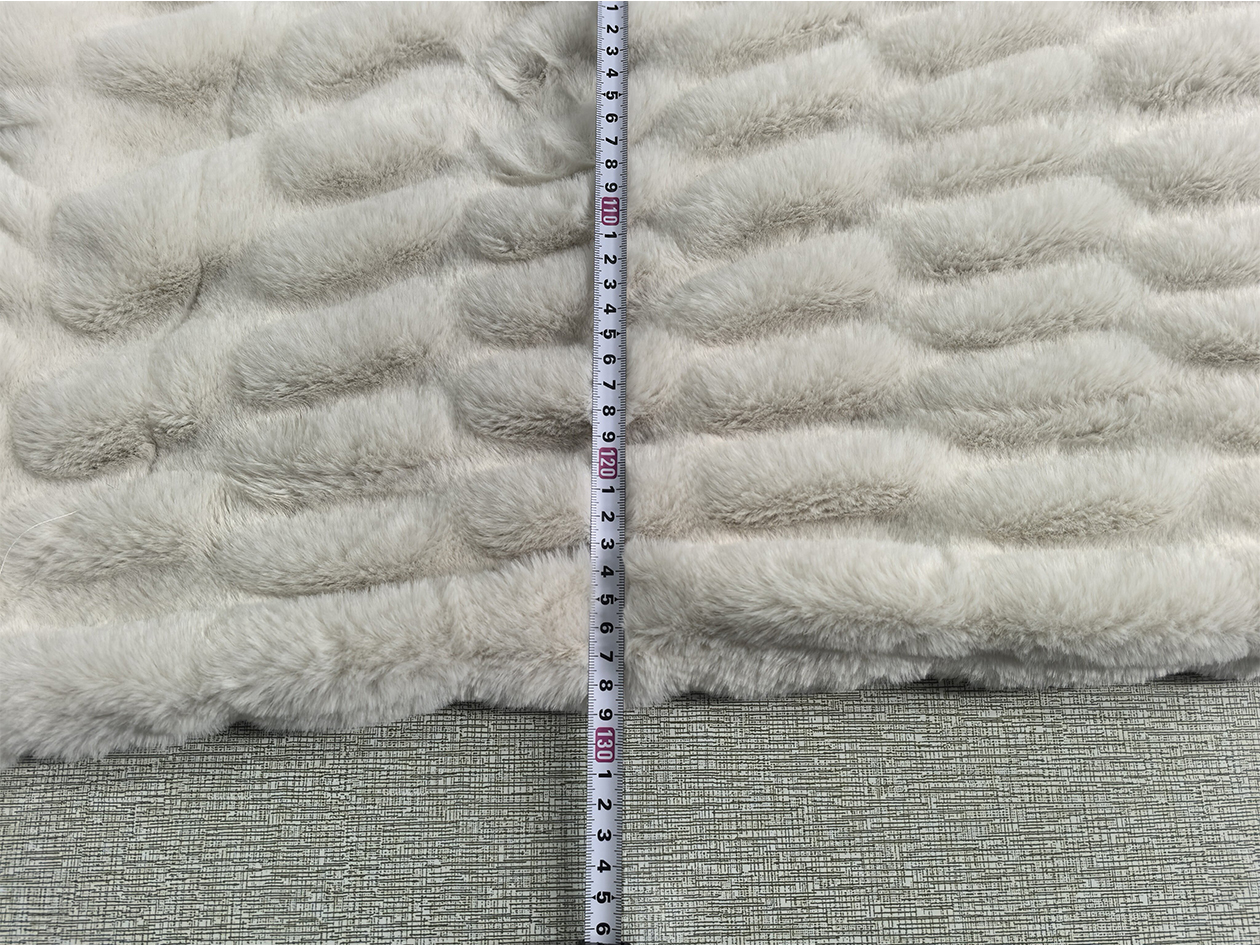
Visual: Inspect the density and uprightness of the pile, check for any heat damage or scorching caused by the finishing process, verify batch-to-batch color consistency, and ensure the signature “ruched bubbles” look full and well-defined.
Tactile: Assess the softness and smoothness. The fabric must feel silky not only when stroked with the grain, but also when rubbed against the grain.
Olfactory: Test for any residual chemical odors, which usually indicate that the dyeing auxiliaries were not thoroughly washed out.
Cutting sets the framework for the blanket’s final dimensions. Three parameters must be strictly managed during this stage:
Fabric Relaxation Time: Raw fabric rolls are subjected to constant tension during transport and storage, leaving the fibers stretched. Before cutting, the fabric must be unrolled and allowed to rest in a natural, tension-free state for at least 2 hours. If cut immediately, the spandex will gradually contract, causing the panels to shrink and resulting in an undersized final product.
Width and Shrinkage Monitoring: Confirm that the actual fabric width matches the product specifications. Because the fabric experiences varied shrinkage rates when exposed to water and high temperatures during dyeing and finishing, poor width control at the dye house will result in narrow fabric widths.
Defect Detection: Operators need to inspect the fabric surface in real time during cutting to identify and discard common defects like stains, holes, or weaving flaws.
If the fabric represents the soul of the blanket, sewing defines its final structure. Assembling spandex faux fur blankets demands a high level of craftsmanship to ensure durable seams, straight topstitching, hidden closures, and a perfectly flat appearance.
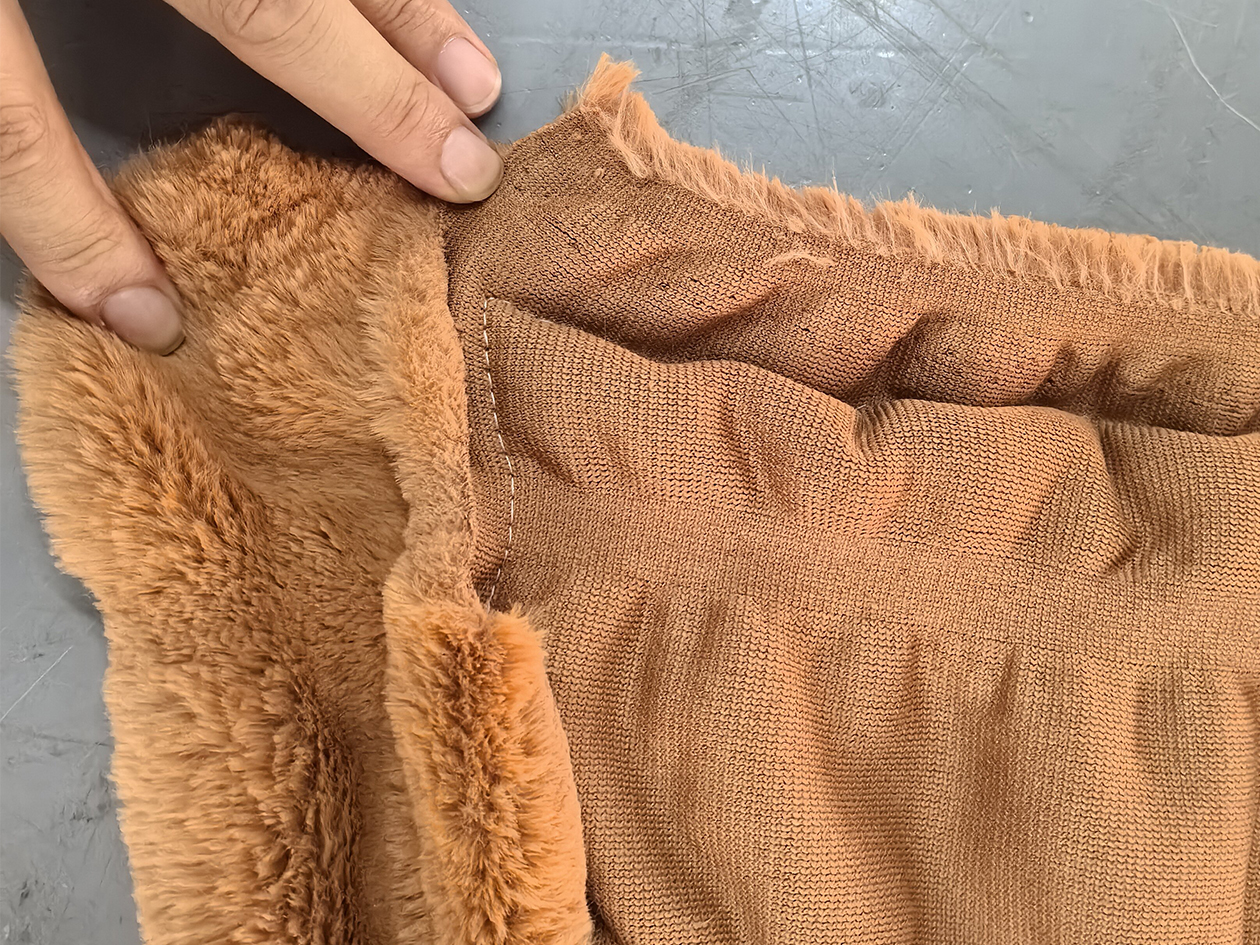
Stitch Security & Edge Protection: The pile height of spandex faux fur is typically around 12mm. This dense pile, combined with the fabric’s elasticity, easily blocks the operator’s view. Without precise craftsmanship, stitches can run too close to the raw edge, which leads to frayed edges or unraveled seams after consumer washings.
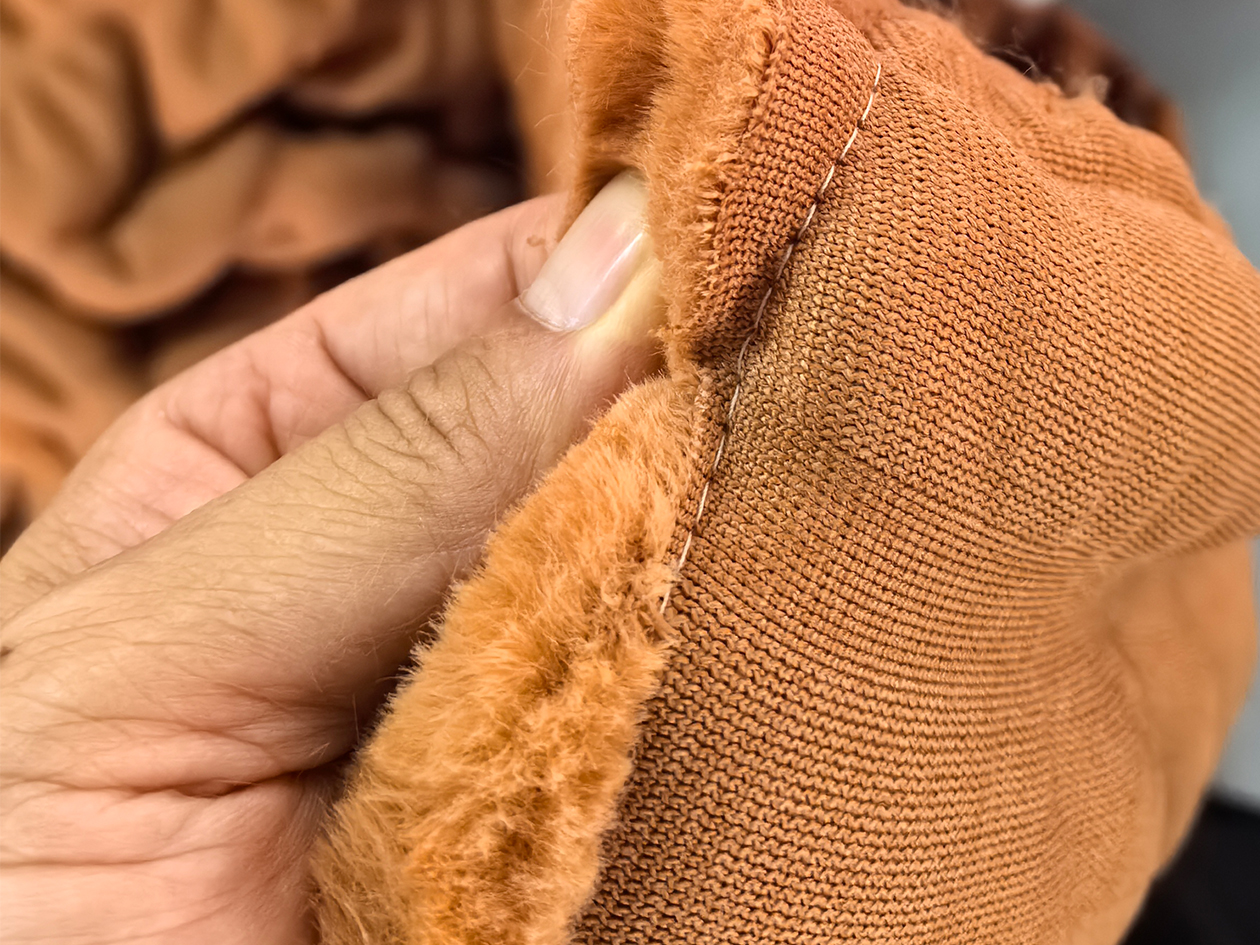
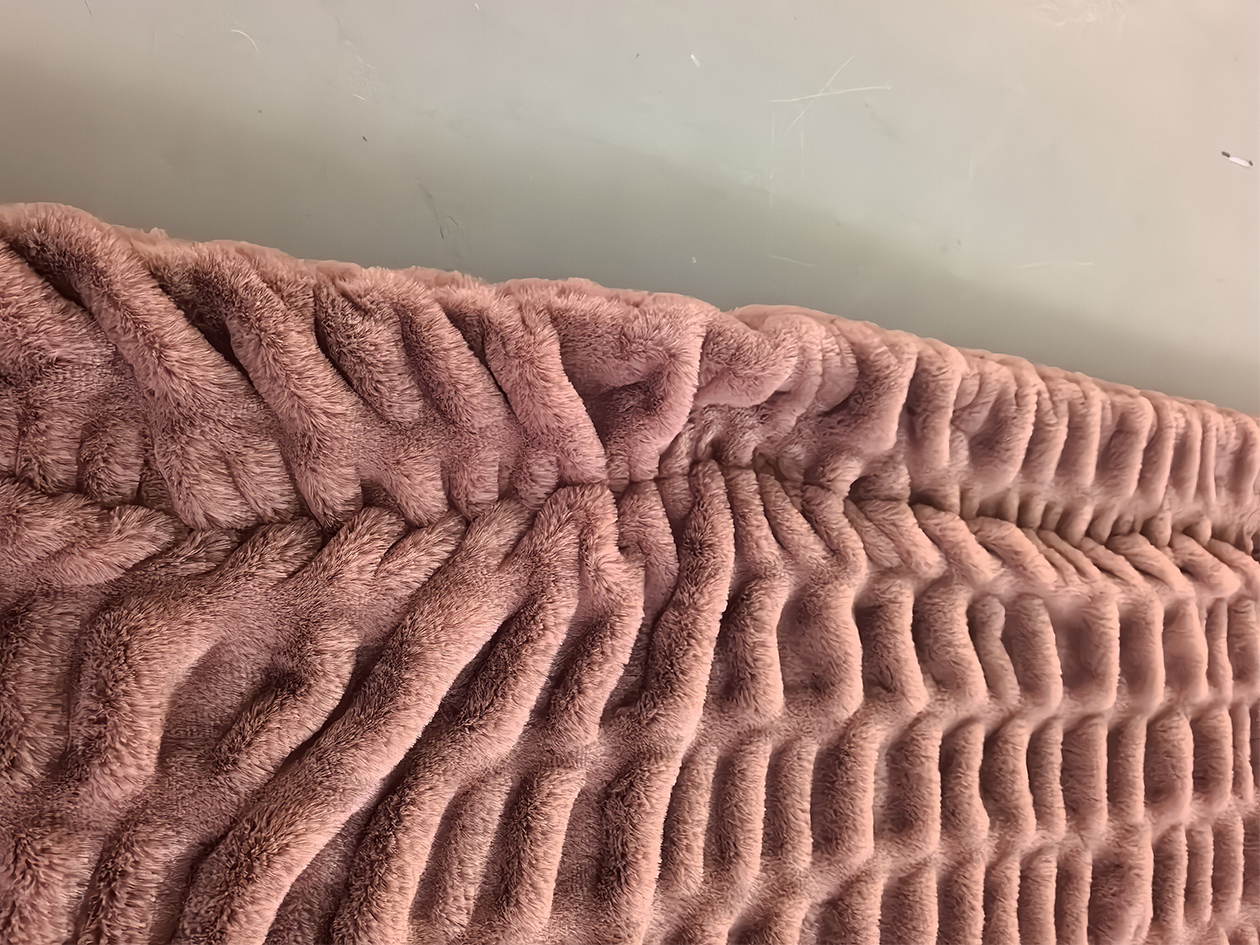
Alignment Techniques for Large Sizes: For large blankets (such as Queen or King sizes), the fabric’s weight and stretch can cause the top and bottom panels to shift. If the pieces lack alignment marks or the operator is less experienced, the panels will not align at the edges, causing the blanket to warp.
Packaging is the final defense line before the product leaves the facility. Focus areas include loose fiber removal and packaging accuracy:
Airborne Lint Contamination: While most facilities use machines to extract loose fibers before packing, a common issue is the delay between extraction and bagging. If the blankets sit uncovered in the workshop, airborne lint will resettle on the cleaned surfaces.
SKU Labeling Accuracy: Mismatched barcodes, hangtags, or polybags are the leading causes of “incorrect item received” complaints in retail and e-commerce logistics.
The fabric sourcing, cutting, sewing, and packaging stages outlined above represent the most vulnerable points for quality variance in spandex faux fur manufacturing. Understanding these industrial challenges is the first step; establishing a practical workflow to execute these checks daily is what ensures a reliable delivery.
To address these specific vulnerabilities, our team has integrated a concrete set of operational measures directly into our everyday supply chain management and order tracking.
To eliminate these common manufacturing risks and guarantee consistent shipments, we implement the following operational protocols throughout the production lifecycle:
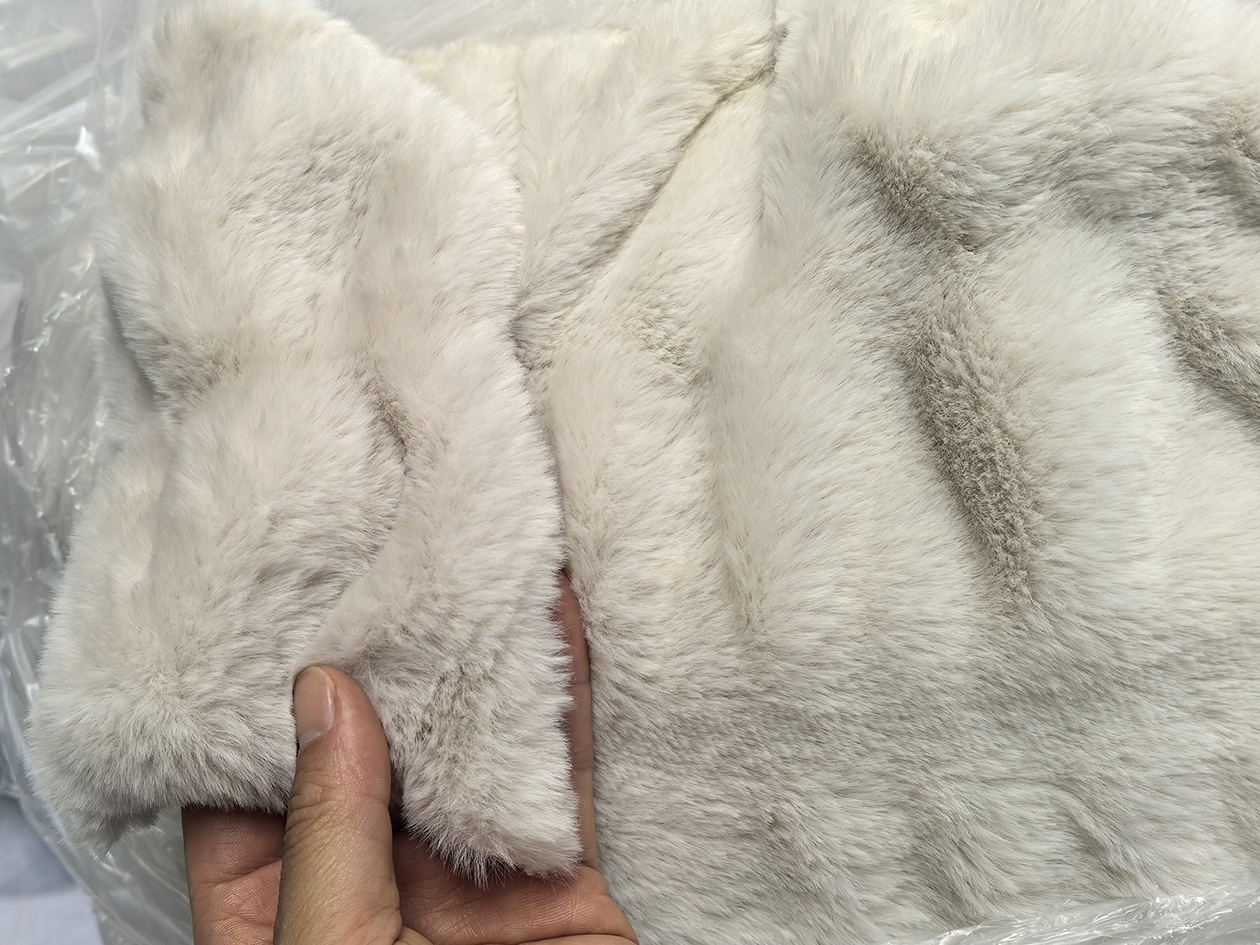
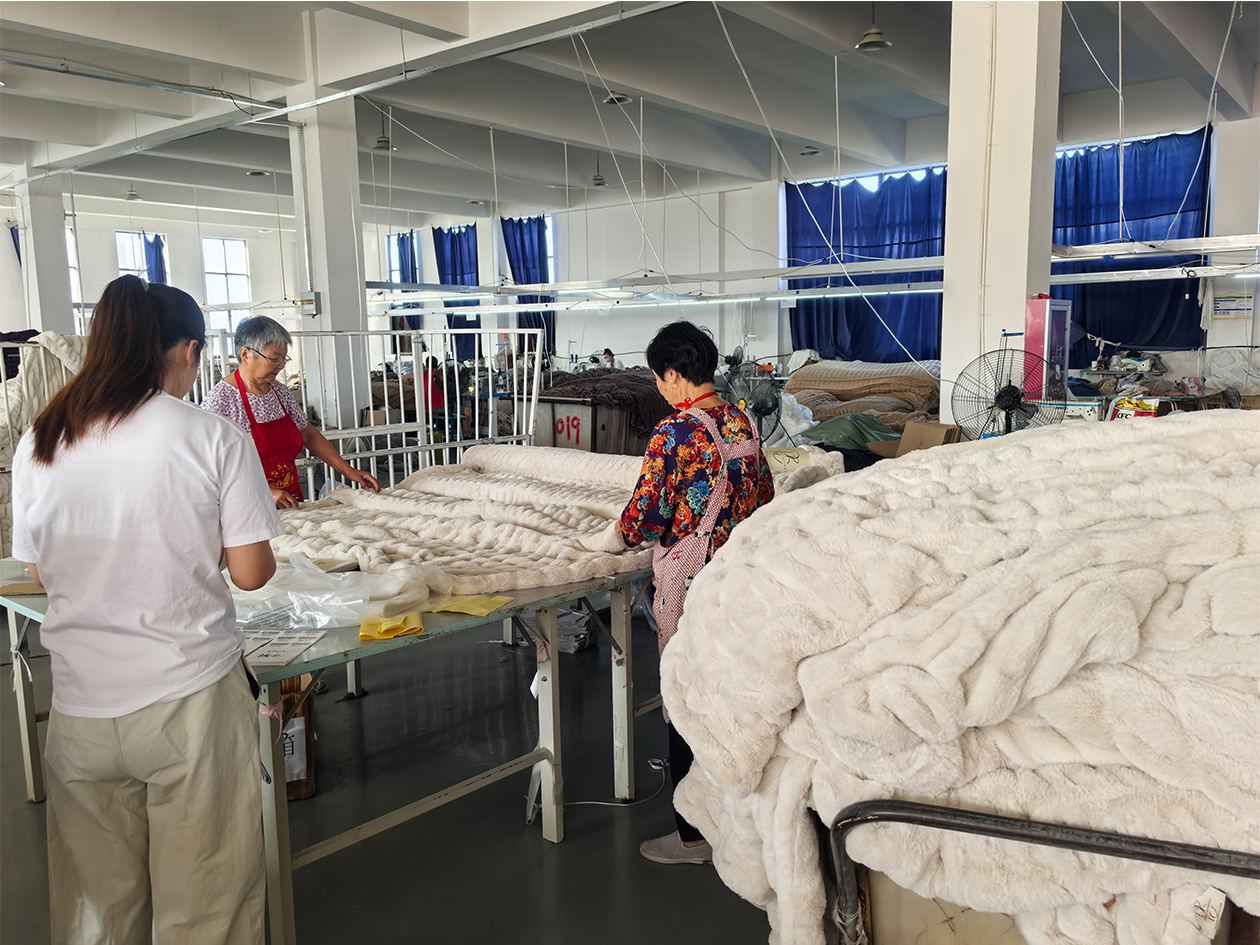
Mechanical Extraction & Covered Transits: After quality verification, we utilize high-power machinery for deep fiber extraction. Once cleared, the blankets are placed immediately into dedicated rolling carts. If packaging is delayed due to workflow scheduling, the products are fully covered with dust-proof sheets to isolate them from airborne lint.
Poka-Yoke (Error-Proofing) Packaging Systems: To manage multi-SKU orders safely, we enforce a strict “One SKU per Station” workflow. Only the labels, hangtags, and polybags for the specific SKU currently being packed are allowed on the workstation. The team must completely pack that batch and clear all remaining materials before requesting packaging supplies for the next SKU, entirely removing the risk of mislabeling.
Independent Quality Supervisors: In addition to the standard factory QC inspectors, we employ independent quality supervisors who report directly to our business development and management team. They conduct random, dynamic audits across every stage of the line—from fabric relaxation times to final labeling verification—evaluating the goods through the strict lens of a buyer to ensure the final shipment matches the order requirements perfectly.
We will contact you within 1 working day, please pay attention to the email with the suffix “@ecozymat.com”.